
☰ Menu
☰ Menu
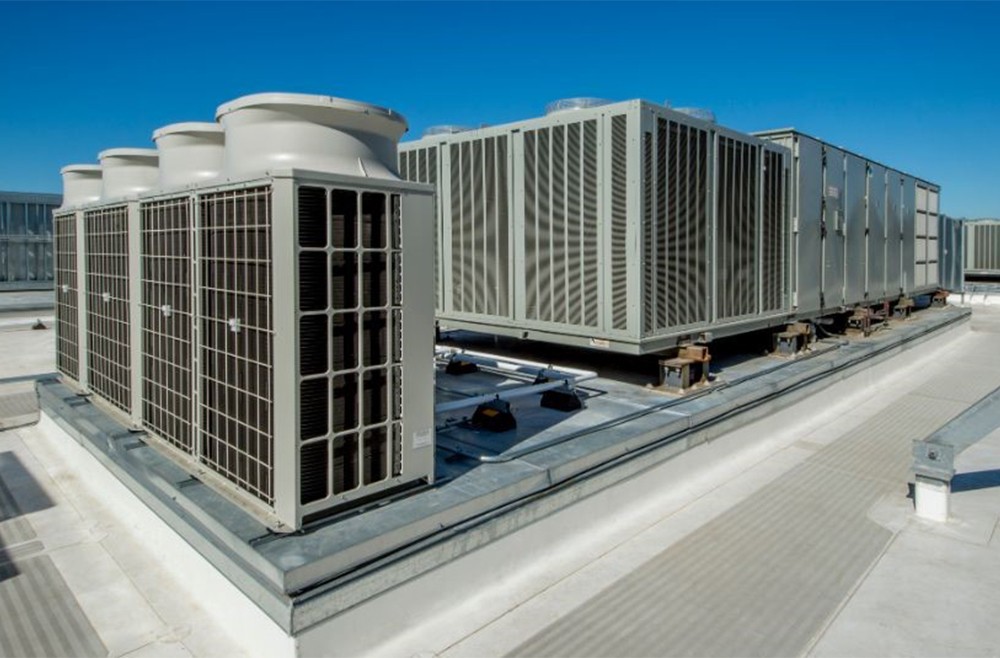
December 16, 2025 – VRV (Variable Refrigerant Volume) and VRF (Variable Refrigerant Flow) systems represent some of the most advanced HVAC technologies used in modern commercial and institutional buildings. Their performance depends on a highly coordinated architecture of inverter-driven compressors, branch selector boxes, networked controllers, and proprietary communication protocols, all working together to regulate precision refrigerant metering across multiple zones. Because these systems rely on such tight engineering tolerances, proactive and specialized maintenance is not just recommended; it is essential for system stability, operating efficiency, warranty compliance, and long-term asset performance.
VRV/VRF systems are commonly found in commercial office buildings, medical office buildings, schools and universities, hotels, retail spaces, mixed-use developments, industrial facilities, multi-family housing, and municipal buildings, essentially any environment that requires high-efficiency heating and cooling, precise zoning, quiet operation, and long piping flexibility. These advanced systems are especially popular in facilities where occupant comfort varies by room or schedule, such as classrooms, patient suites, guest rooms, conference spaces, and specialized industrial or tech environments. Their ability to deliver individualized temperature control, lower energy consumption, and architectural flexibility makes VRV/VRF a preferred choice across many modern commercial and institutional applications.
Unlike traditional HVAC equipment, VRV/VRF systems are extremely sensitive to deviations in refrigerant charge, sensor accuracy, and communication integrity. Even a minor issue such as a 5% refrigerant variance or a misaligned thermistor can initiate a cascade of operational disruptions. These seemingly small errors can create compressor overload conditions, reduce heating and cooling capacity, increase electrical consumption, and trigger indoor-unit communication faults that escalate into system-wide alarms. Over time, neglecting routine maintenance can result in more serious consequences, including capacity losses exceeding 30%, premature compressor and PCB failures, heat-recovery malfunctions, and ultimately the loss of manufacturer warranty coverage. These types of failures often lead to high-cost emergency service calls and avoidable downtime.
Given the sophistication of VRV/VRF technology, building owners and facility managers need a service partner with deep technical expertise and the right diagnostic capabilities. McClure Company provides that level of support through OEM-trained technicians, factory-authorized diagnostic software, and fully data-driven maintenance programs tailored specifically for variable refrigerant systems. With 24/7 service coverage and advanced Building Automation System (BAS) integration expertise, McClure Company ensures that VRV/VRF systems operate at peak performance throughout their entire lifecycle. For Maryland facilities relying on this technology, proper maintenance is not just a best practice, it is a critical investment in reliability, efficiency, and long-term operational success.

Service
1-800-382-1319
Sign Up for Our Email List: